Investors are eagerly awaiting Nvidia’s earnings for the latest quarter, with the spotlight on the company. Today, Nvidia is one of the most crucial companies in the stock market, and its performance isn’t defined solely by a single chipmaker. The figures can impact the overall technology industry, AI-related stocks, and investor confidence in the super-sized AI spending cycle.
Nvidia is scheduled to report its fiscal second-quarter 2027 results on Wednesday, August 26, after the U.S. market closes. The company has also scheduled its earnings conference call for 5 p.m. ET.
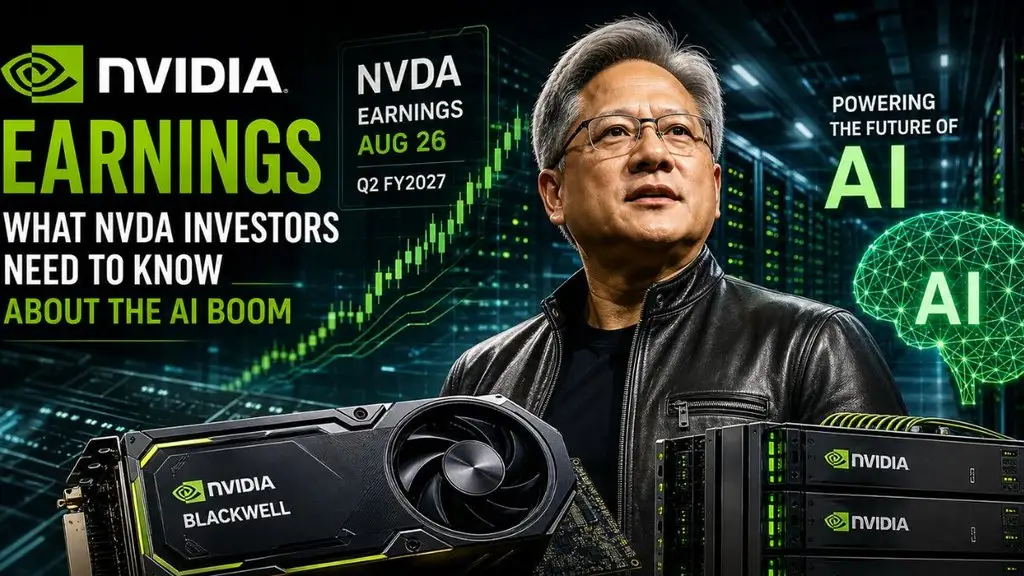
Nvidia Earnings Expectations Are Extremely High
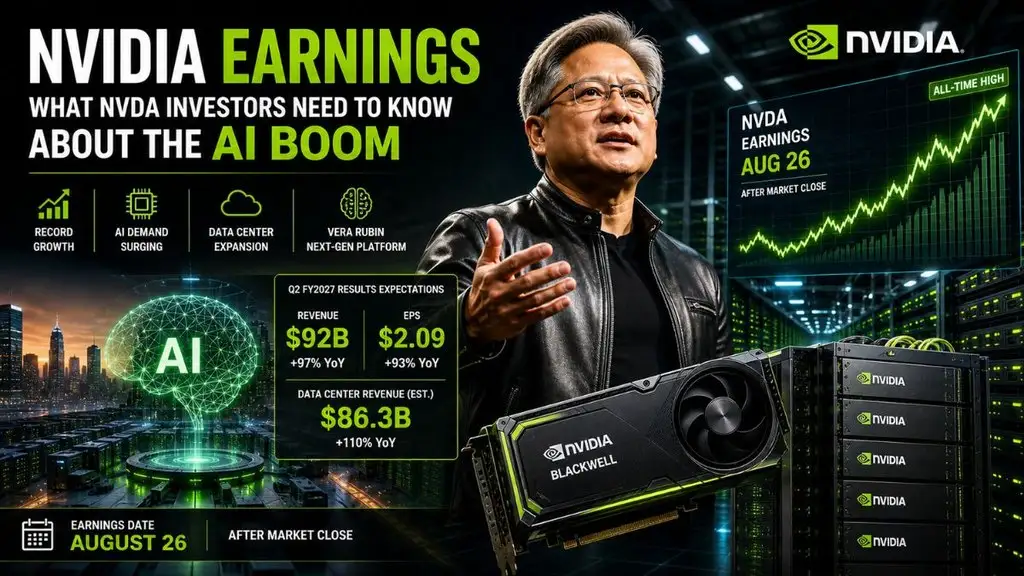
Wall Street is expecting another huge quarter from Nvidia. Current estimates point to revenue of roughly $92 billion, representing growth of about 97% from the same period a year earlier. Analysts are also looking for earnings of around $2.09 per share, almost double the year-ago figure.
Those numbers show how dramatically Nvidia has grown since the AI boom accelerated. The challenge, however, is that investors are no longer satisfied with simply beating expectations.
Nvidia has repeatedly delivered stronger-than-expected results, and that success has pushed expectations higher. According to Wall Street Journal reporting, the company has produced a triple beat—stronger earnings, revenue and guidance—in 14 of its last 20 quarters. Yet NVDA stock has struggled to deliver the same immediate reaction it once did after earnings.
That creates an important question for this Nvidia earnings report: How strong is strong enough?
NVDA Stock Faces a Higher Bar
The reaction in Nvidia stock could depend more on future guidance than on the headline earnings number.
Nvidia shares were trading lower ahead of the report as investors prepared for a potentially volatile reaction. Reuters noted that the stock was down nearly 1% before the results, reflecting how much optimism is already priced into the company.
History also suggests that a good earnings report does not automatically mean a higher share price. The Wall Street Journal reported that Nvidia shares have averaged a 2.8% decline following earnings over the past four quarters, despite the company continuing to outperform expectations.
For investors watching NVDA, that is an important distinction. A company can report excellent financial results while its stock falls if investors expected even better results.
AI Demand Remains the Biggest Story
The biggest issue behind Nvidia earnings is still demand for AI infrastructure.
The expansion of Nvidia’s all-encompassing data-center business is its financial powerhouse, fueled by investments from cloud providers and other big tech firms. Analysts estimate that July quarter data-center revenue will be approximately $86.3 billion, an increase of approximately 110% year over year.
Investors therefore want evidence that AI spending remains durable. The key question is no longer simply whether companies are buying Nvidia GPUs. It is a question of whether those enormous AI investments will eventually generate enough revenue and productivity gains to justify the spending. For another look at how AI and advanced technology could influence future market valuations, see our SpaceX Stock Price 2030 Forecast
That is also the central issue highlighted by The Wall Street Journal: Nvidia’s earnings can indicate extraordinary demand, but they cannot fully answer whether the broader AI investment cycle will yield sustainable returns over the long term.
Vera Rubin Could Be the Next Big Catalyst
Another major focus for the earnings call will be Nvidia’s next-generation Vera Rubin platform.
Investors want to know how quickly Rubin will ramp up and whether Nvidia can maintain its extraordinary growth as customers transition from current Blackwell systems to newer products. Nvidia has said the fiscal second-quarter results will be discussed during its August 26 conference call, making management commentary particularly important for investors looking beyond the current quarter.
The transition matters because investors are increasingly thinking about Nvidia’s growth beyond 2026. Strong current sales are important, but confidence in future demand could have an even bigger impact on NVDA stock.
What to Watch After Nvidia Earnings
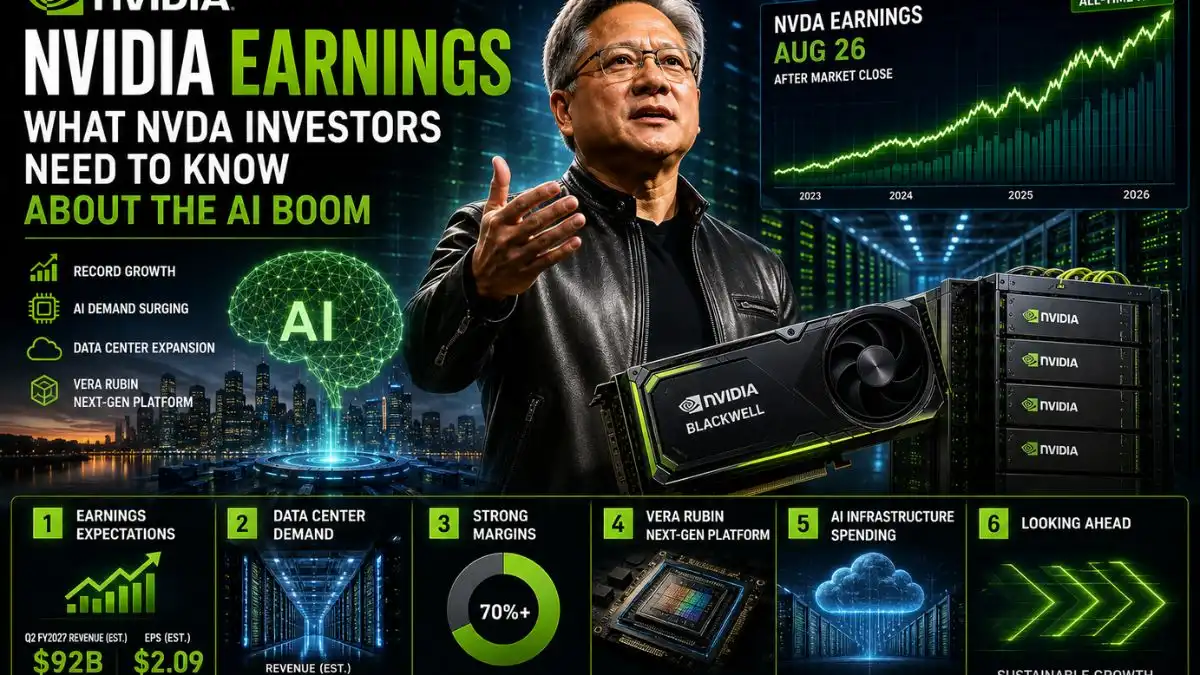
Once the numbers are released, investors should look beyond revenue and earnings per share. The most important points will likely include:
- Nvidia’s forward revenue guidance.
- Data-center growth and customer demand.
- Gross-margin expectations.
- The pace of the Vera Rubin rollout.
- Management’s comments about AI infrastructure spending.
- The sustainability of demand through 2027 and beyond.
Nvidia enters this report from an unusually strong position. Its first-quarter fiscal 2027 revenue reached a record $81.6 billion, up 85% year over year, showing how quickly the business continues to expand. Another major focus for the earnings call will be Nvidia’s Investors therefore want evidence that AI spending remains durable. The key question is no longer simply whether companies are buying Nvidia GPUs. It is a question of whether those enormous AI investments will eventually generate enough revenue and productivity gains to justify the spending.next-generation Vera Rubin platform.
The Bottom Line for NVDA Investors
The latest Nvidia earnings report is about much more than whether the company beats Wall Street estimates. Investors are looking for proof that Nvidia can continue turning unprecedented AI demand into sustainable growth.
For NVDA stock, the bar is exceptionally high. A major earnings beat could still disappoint investors if the outlook is not strong enough, while confident guidance on AI demand and Vera Rubin could give the shares a fresh catalyst.
In short, Nvidia remains the market’s clearest test of the AI boom. The earnings numbers will matter, but the real story may be what Jensen Huang and his team say about where that boom is heading next.
Pingback: Salesforce Stock (CRM) Soars on AI Growth and Strong Earnings
Pingback: Broadcom Stock: What Investors Need to Know Before the Next Earnings Report
Pingback: Dell Stock: Earnings, AI Server Demand and 2026 Outlook
Pingback: AI Trade Stumbles as Leaders Warn of AI Development Slowdown