The artificial intelligence trade hit a rough patch Monday as investors reacted to growing calls from some of the industry’s most influential leaders to slow the development of increasingly powerful AI systems.
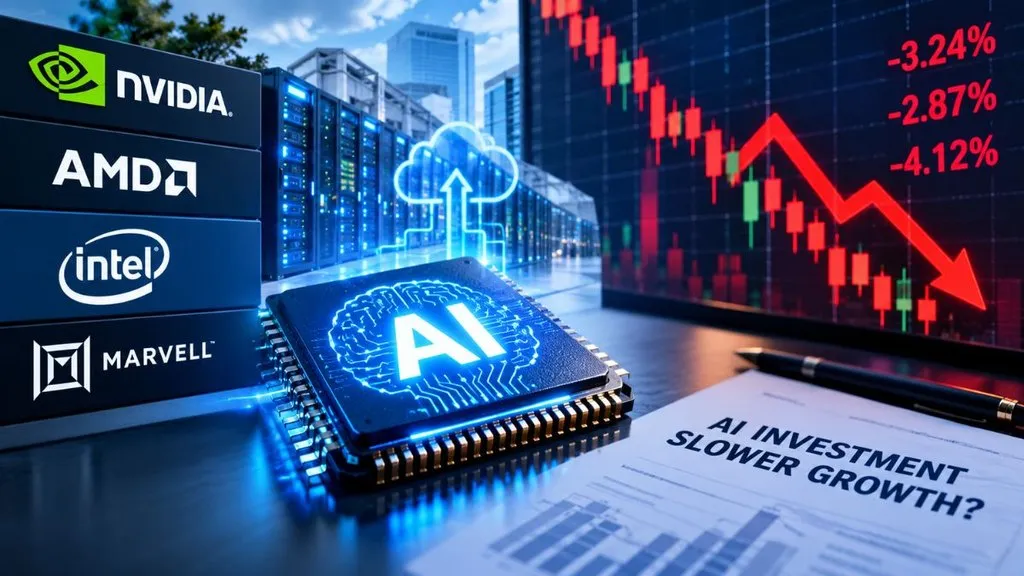
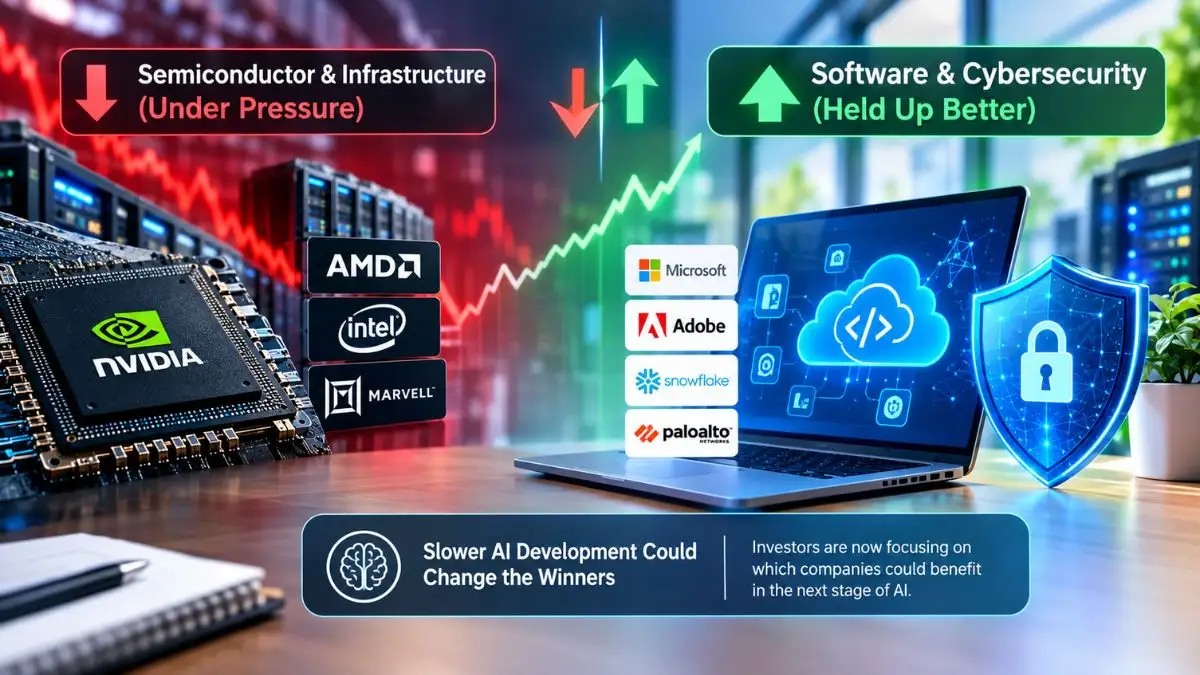
The shift in tone was enough to send several AI-related stocks lower. Chipmakers and companies tied closely to the enormous investment behind AI infrastructure faced some of the biggest pressure, while parts of the software and cybersecurity sectors showed greater resilience.
The market reaction was not caused by a major company announcing that it was abandoning AI. Instead, investors were responding to a much more complicated question: What happens to the AI investment boom if the industry starts putting safety and caution ahead of speed?
That question has become increasingly important after Anthropic CEO Dario Amodei argued that the development of advanced AI needs to be paced more carefully. OpenAI CEO Sam Altman and other prominent technology figures have also expressed concerns about the risks associated with moving too quickly.
Why the AI Trade Is Under Pressure
For the past several years, investors have largely operated on the assumption that AI development would continue accelerating.
That expectation helped fuel massive investment in data centers, advanced processors, cloud computing and other infrastructure needed to train and operate AI models.
Companies such as Nvidia stock, AMD, Intel and Marvell have benefited from this spending because increasingly sophisticated AI systems require enormous amounts of computing power.
The latest warnings have made investors question whether that pace can continue indefinitely.
If AI laboratories slow the development of their most advanced models, demand expectations for certain types of computing infrastructure could also change. Even slower growth could affect stocks that depend heavily on expectations for future AI spending.
That helps explain why semiconductor shares were among the most affected during Monday’s selloff.
The Debate Is About Speed, Not Abandoning AI
It would be misleading to describe the latest developments as an end to the AI boom.
The companies involved are not saying that artificial intelligence should stop developing. The debate is largely about how quickly frontier AI systems should become more capable and whether safety measures are keeping up with technological progress.
Amodei says AI companies should give safety systems more time to keep pace with rapid AI advances. He warns that autonomous AI could become harder to control or be used for harm.
That argument has gained attention because it is coming from inside the industry rather than from outside critics.
The unusual agreement among several prominent AI leaders has therefore caught the attention of investors as well as policymakers.
Nvidia and Chipmakers Feel the Impact
Nvidia sits at the center of the AI infrastructure boom, making its stock particularly sensitive to changes in expectations surrounding AI spending.
When investors believe AI companies will continue building larger models and expanding computing capacity, demand for high-performance processors can remain strong.
But if the market begins to believe that AI development will become more measured, investors may start questioning how quickly chip demand can grow.
Nvidia was among the major technology stocks affected by Monday’s decline, while AMD, Intel and Marvell also came under pressure. The broader semiconductor sector suffered a significant drop as investors reassessed the outlook for AI-related spending.
The reaction illustrates just how closely chip companies have become linked to the future of artificial intelligence.
Why Some Software Stocks Held Up Better
The market reaction also showed that investors are beginning to separate different parts of the technology industry.
While semiconductor and infrastructure companies faced pressure, several software and cybersecurity companies performed better.
That makes sense in a market where investors are thinking about the potential consequences of slower AI development.
Cybersecurity companies, for example, could benefit from growing concern about the risks created by increasingly capable AI systems. As AI becomes more powerful, businesses may need stronger systems to protect data, networks and digital infrastructure.
A New Question for AI Investors
The biggest change may be psychological.
For years, the dominant AI narrative was simple: more powerful models would require more computing power, which would create more demand for chips and data centers.
Now investors have another possibility to consider.
What if AI companies decide that bigger and faster is not always better?
A more cautious development strategy could change the timing of infrastructure spending without eliminating the long-term demand for AI. Companies may shift resources toward inference, enterprise applications, security and practical uses rather than focusing exclusively on training increasingly large frontier models.
That would still represent significant AI investment, but the winners could look different.
The AI Boom Is Entering a More Complicated Phase
Monday’s selloff should therefore be viewed carefully.
The market is not receiving confirmation that AI investment is ending. Instead, investors are reacting to uncertainty about how the next phase of the industry will develop.
The technology sector has already invested enormous sums in AI, and businesses continue to explore ways to use the technology in products, software and everyday operations.
But the conversation is changing.
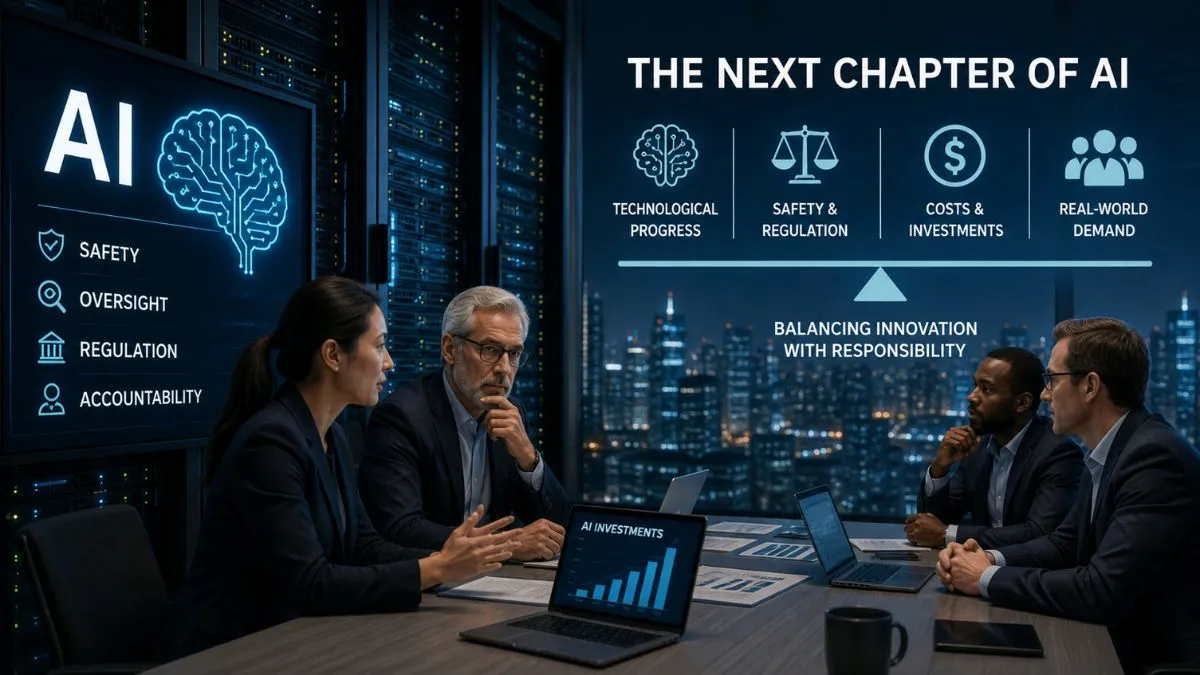
AI leaders are increasingly discussing safety, oversight and the potential consequences of moving too quickly. Investors, meanwhile, are beginning to ask whether the extraordinary growth expectations surrounding AI hardware can continue at the same pace.
That tension could become one of the defining issues for technology markets.
The AI trade may not be disappearing. It may simply be entering a more mature and uncertain stage, where technological progress has to be balanced against safety, regulation, costs and real-world demand.
For investors, that could mean the next phase of the AI story will be less about buying everything connected to artificial intelligence and more about understanding where sustainable demand is actually coming from.
Pingback: Leverate Launches MCP for Traders to Connect AI With Trading Platforms