The Apple stock price is once again attracting attention as the company begins a new chapter under CEO John Ternus.
For more than a decade, Apple was led by Tim Cook, who succeeded Steve Jobs in 2011. Cook’s tenure ended on September 1, 2026, when Ternus officially became chief executive. Cook moved into the role of executive chairman. Apple announced the leadership transition earlier this year and described it as part of a long-planned succession process.
The change matters to shareholders because Apple is entering a period in which its next stage of growth is less straightforward than its previous one.
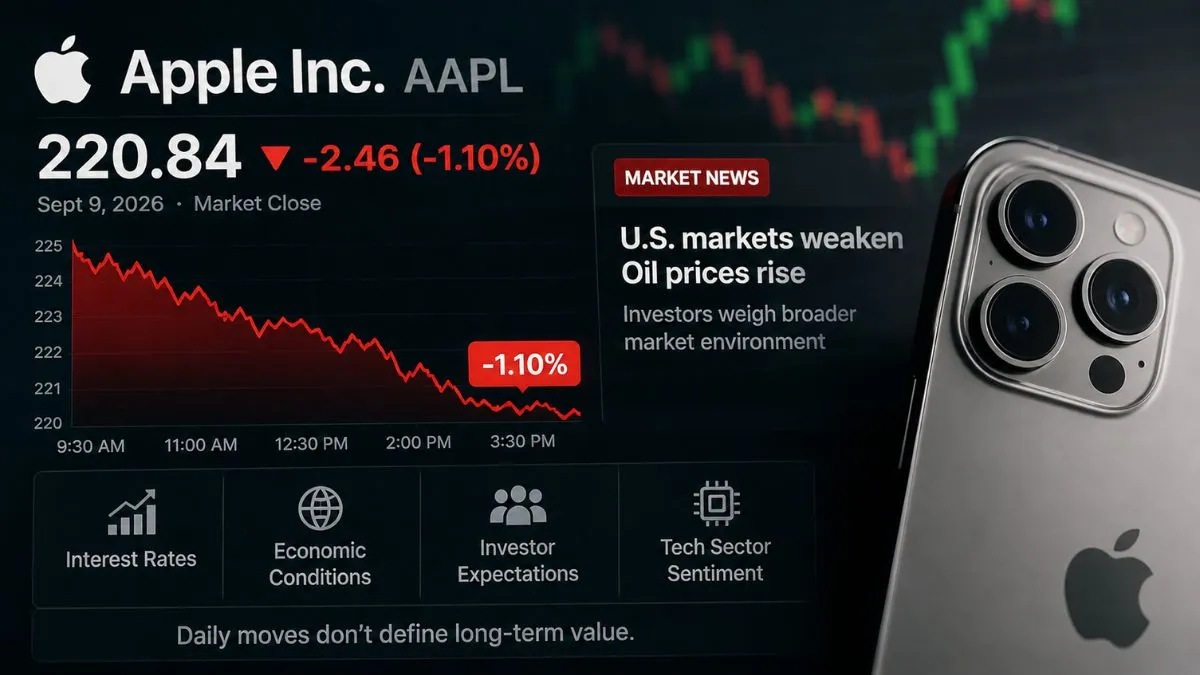
Apple stock price remains sensitive to company news
Apple shares have been volatile around the company’s latest product announcements. On September 9, the stock fell about 1.1% as investors considered Apple’s new products and the broader market environment. Reuters also noted that weakness across U.S. markets and higher oil prices were affecting investor sentiment.
That daily movement is worth keeping in perspective. A company’s share price can move for many reasons that have little to do with its long-term business performance, including interest rates, economic conditions, investor expectations and broader technology-sector sentiment.
For that reason, the Apple stock price on any single day does not provide a complete picture of the company.
Tim Cook changed Apple’s business in important ways
Cook inherited an enormously successful company, but Apple did not simply remain the same business during his leadership.
The company expanded its services business, including areas such as the App Store, subscriptions and payments. Apple also developed products such as the Apple Watch and AirPods while continuing to build around the iPhone, Mac and iPad.
This created a broader ecosystem in which customers can use multiple Apple products and services together.
The financial effect of that strategy is one reason Cook’s time as CEO is closely studied. Some reports have calculated very large shareholder gains during his tenure. However, those calculations depend on the exact purchase date, stock splits, dividends and whether dividends were reinvested. They should therefore be treated as historical examples rather than predictions of what Apple stock will do in the future.
Investors are also closely watching Tesla Stock Falls After Cybercab as the company’s push into autonomous driving continues to shape expectations for its future growth.
Buybacks also influenced shareholder returns
Apple’s share repurchase program was another important part of the Cook era.
When a company buys back its own shares, the number of shares outstanding can decline. If the company’s earnings remain strong, that can increase earnings attributable to each remaining share.
Apple has spent hundreds of billions of dollars on share repurchases over the years. Buybacks, dividends and business growth all contributed to the overall experience of long-term shareholders.
Still, past shareholder returns should not be confused with a guarantee of future performance.
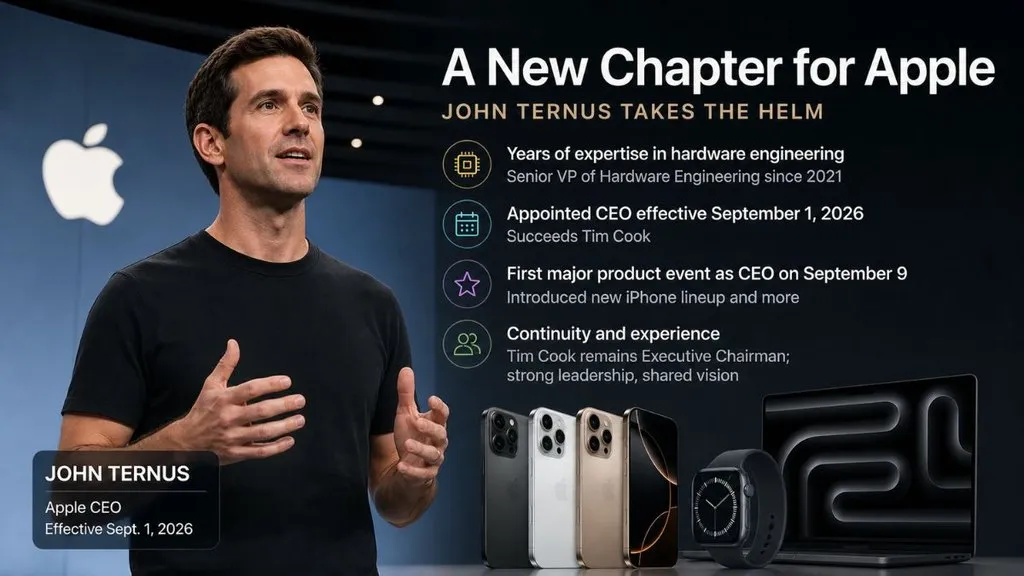
John Ternus begins a new chapter
The biggest question surrounding Apple now is not simply where its stock price goes next. It is whether the company can continue growing at a scale that investors have come to expect.
Ternus has spent much of his Apple career in hardware engineering and became senior vice president of Hardware Engineering in 2021. Apple selected him to succeed Cook effective September 1, 2026.
His first major product event as CEO took place on September 9. Apple introduced its latest iPhone lineup and other products, giving investors an early look at how the company will operate under its new leadership.
The transition is significant, but it does not represent a complete break with the past. Cook remains involved as executive chairman, while Ternus brings years of experience inside Apple.
What could affect Apple stock next?
Investors are likely to focus on several areas as the new leadership team settles in.
iPhone demand remains particularly important because the iPhone continues to be central to Apple’s business.
Services growth is another key area. The company has spent years building services into a substantial part of its overall business, providing revenue beyond hardware sales.
Artificial intelligence could become increasingly important. Apple is working to bring more AI capabilities into its devices and software, while competing against technology companies that have made AI a major priority.
New products will also receive close attention. Apple’s latest product event included its first foldable iPhone, making the launch an important test of whether the company can create demand in a new product category.
What the Apple stock price tells us—and what it doesn’t
Apple’s share price reflects the expectations investors have about the company’s future, not simply its current financial results.
That is why the stock can rise or fall even when there has been no dramatic change in Apple’s underlying business. Expectations about future iPhone sales, AI progress, margins, interest rates and competition can all influence the valuation.
The end of the Cook era provides useful historical context, but it does not tell investors exactly what comes next.
Apple now has a new CEO, a mature hardware business, a growing services ecosystem and increasing pressure to demonstrate progress in artificial intelligence and new products. How those pieces develop will likely matter more to the Apple stock price over time than any single day’s market movement.