Tesla stock came under pressure after the company’s latest Cybercab update failed to provide the level of detail some investors had been expecting.
Shares declined about 6% on September 4, following a rise of more than 5% the previous day as investors prepared for the Cybercab event in Austin, Texas. The move showed how closely the market is watching Tesla’s plans for autonomous vehicles and robotaxis.
The Cybercab is an important part of Tesla’s strategy to expand beyond traditional electric vehicles. However, the latest update also highlighted some of the challenges the company faces as it attempts to bring autonomous transportation into wider commercial use.
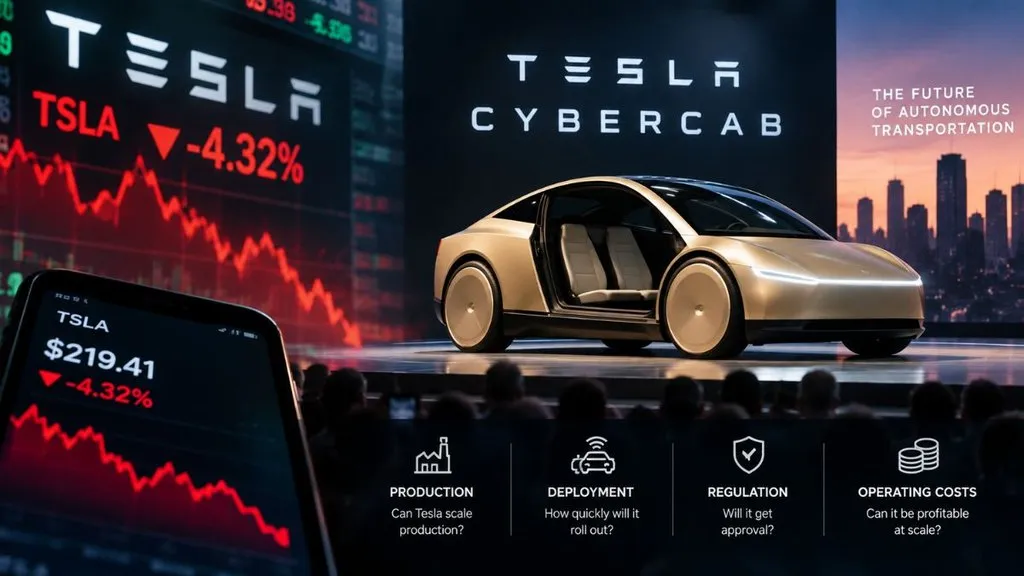
Tesla Stock Reaction to the Cybercab Event
The Cybercab event had attracted significant attention because investors were looking for information about Tesla’s plans to expand its robotaxi service.
The vehicle is designed as a two-seat autonomous car and does not include a conventional steering wheel or pedals. Tesla has positioned the Cybercab as a purpose-built vehicle for its future robotaxi network.
The market reaction suggested that the event did not provide enough new information to support the expectations that had built up around it.
Rather than focusing only on the vehicle itself, investors are looking at how quickly Tesla can move from a limited service to a larger operation. Questions surrounding production, deployment, regulation and operating costs remain important for the company’s autonomous-driving plans.
The decline in Tesla stock therefore reflects more than a reaction to one event. It also reflects the higher level of scrutiny facing Tesla as autonomous driving becomes an increasingly important part of its investment story. Investors are also watching broader market risks. For more context, read our analysis of Stock Market Crash.
NHTSA Review Creates Additional Uncertainty
Another issue attracting attention is a review by the National Highway Traffic Safety Administration, known as NHTSA.
The agency is examining aspects of Tesla’s Cybercab rollout and the information associated with its safety certification. The review is particularly relevant because the Cybercab has a different design from conventional passenger vehicles.
The absence of traditional driver controls raises questions about how the vehicle fits within existing federal safety requirements.
A regulatory review does not by itself indicate that Tesla has violated safety regulations or that the Cybercab has been determined to be unsafe. However, regulatory requirements remain an important factor for any company seeking to deploy autonomous vehicles on a larger scale.
For Tesla investors, the NHTSA review adds another issue to monitor as the company expands its robotaxi operations.
Why Cybercab Matters for Tesla Stock
The importance of Cybercab goes beyond the sale of another Tesla vehicle.
Tesla has increasingly emphasized autonomous driving as part of its long-term business strategy. The company’s goal is to develop vehicles that can operate with limited or no human involvement and eventually support a large robotaxi network.
If that strategy develops as planned, Tesla could generate revenue from transportation services in addition to vehicle sales.
But the potential size of that market is not enough on its own to support the investment case. Tesla still needs to demonstrate that its autonomous technology can operate reliably, that the vehicles can be produced economically and that regulators will permit broader deployment.
Those factors could determine how investors assess the future contribution of Cybercab to Tesla’s business.
Investors Are Looking for Measurable Progress
The latest reaction in Tesla stock also reflects a broader change in investor expectations.
Tesla has discussed autonomous driving for several years, and investors have heard numerous forecasts about the potential of robotaxis. As the company moves toward commercial deployment, the focus is shifting from future possibilities to measurable results.
That includes the number of vehicles operating, the geographic area covered by the service, customer usage and the cost of operating each vehicle.
Production capacity will also matter.
Even if Tesla’s autonomous technology performs well, the company will need to produce enough vehicles to create a meaningful network. At the same time, the cost of building and maintaining those vehicles will influence whether a robotaxi business can generate sustainable margins.
These are questions that cannot be answered by a launch event alone.
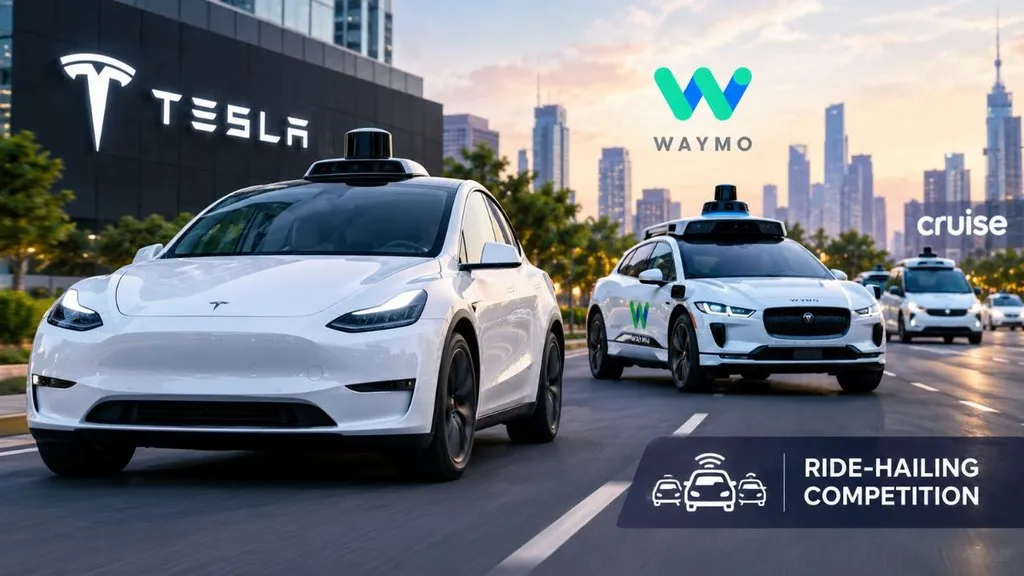
Competition Is Another Factor
Tesla is also entering a market where other companies are already testing or operating autonomous ride-hailing services.
Waymo, for example, has been expanding its driverless ride-hailing operations in several U.S. markets. This gives investors a practical comparison when considering Tesla’s progress.
The competitive environment means Tesla will need to demonstrate not only that its technology works, but also that its approach can operate efficiently and at a scale that makes the business economically significant.
The timing of Tesla’s expansion will therefore be important. Investors are also keeping an eye on PYPL Stock as PayPal continues its turnaround efforts.
What Investors Will Watch Next
The next developments around Cybercab could have a greater effect on Tesla stock than the launch itself.
Investors are likely to pay attention to any expansion of Tesla’s robotaxi service, regulatory decisions, production information and data from vehicles operating in real-world conditions.
Evidence of steady expansion could reduce some of the uncertainty surrounding the program. On the other hand, delays, additional regulatory requirements or problems with autonomous operation could increase concerns.
Tesla’s broader financial performance will also remain important. The company is investing heavily in artificial intelligence, autonomous driving and new vehicle programs, meaning investors will continue to assess whether those investments are producing sufficient financial returns.
The Outlook for Tesla Stock
The Cybercab is an important test of Tesla’s autonomous-driving strategy. The recent drop in Tesla stock shows that investors wanted more clarity from the latest update.
In the coming months, production, safety, regulation, usage and costs will remain key issues.
Until Tesla provides more evidence of progress, the Cybercab will remain a developing part of the company’s future.
Pingback: Apple Stock Price: What Investors Should Know After Tim Cook’s Exit