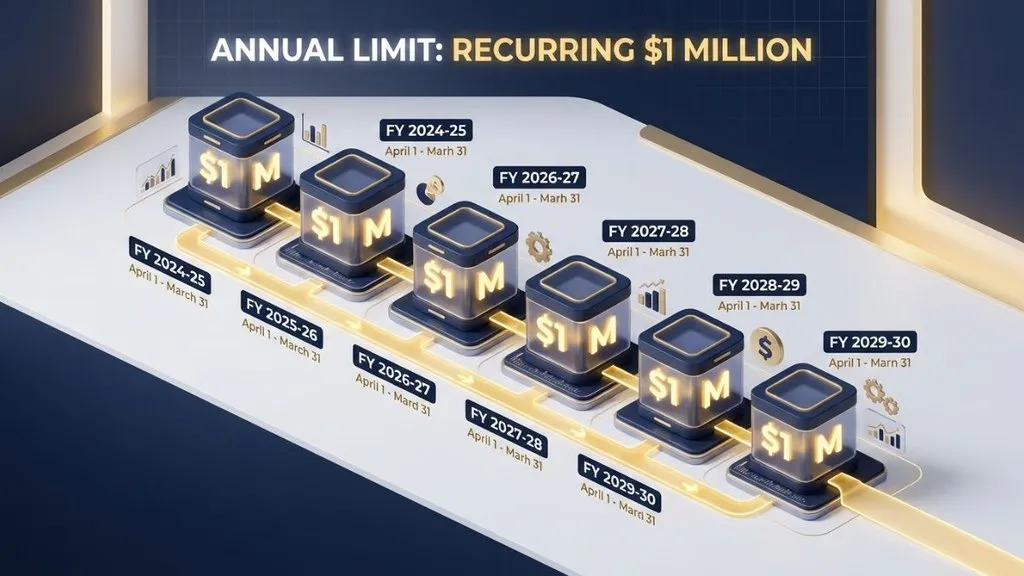
NRO to NRE transfer limit 2026: NRIs can transfer eligible funds from an NRO account to an NRE account within an overall limit of USD 1 million per financial year, subject to applicable taxes, documentation and RBI rules. The financial year runs from April to March.
For NRIs who have money accumulated in India, this rule can be important when deciding how to manage funds held in an NRO account. But the $1 million figure does not mean every rupee in an NRO account can automatically be transferred without conditions.
What is the NRO to NRE transfer limit?
The Reserve Bank of India allows eligible NRIs to transfer repatriable funds from an NRO account to an NRE account within the overall USD 1 million per financial year facility.
RBI’s current FAQ confirms that NRO balances of eligible NRIs and PIOs can be remitted up to USD 1 million during a financial year, subject to the conditions under the applicable foreign-exchange regulations. It also states that funds can be transferred to an NRE account within this $1 million facility.
The facility is therefore not an unlimited transfer option. Applicable taxes and other requirements must also be considered.
Can NRIs transfer money from NRO to NRE?
Yes. RBI specifically permits eligible NRI account holders to transfer funds from an NRO account to an NRE account within the overall USD 1 million annual ceiling, subject to payment of applicable taxes.
The RBI circular allowing this facility states that the transfer is permitted for repatriable funds and that the applicable tax requirements must be satisfied.
This can be useful for NRIs who have accumulated eligible funds in India and want those funds to be held in an NRE account.
Why is the NRO-to-NRE transfer important?
NRO and NRE accounts have different purposes.
An NRO account is generally used by NRIs to manage income and funds connected with India. Examples can include rental income, pension, dividends, interest and other permitted receipts.
An NRE account, on the other hand, is primarily designed for eligible foreign earnings held in India. NRE balances are generally repatriable, subject to applicable regulations.
Because of this difference, an NRI may want to move eligible money from NRO to NRE when the funds qualify under the applicable repatriation rules.
However, transferring money between the accounts does not automatically change the tax treatment of the income from which the money originated.

Does the $1 million limit apply every year?
Yes, the facility is calculated on a financial-year basis, meaning April through March.
For example, an NRI who uses part of the facility during one financial year cannot treat that amount as completely unused simply because a new calendar year begins in January. The relevant financial year ends in March.
The USD 1 million figure should also not be understood as a separate $1 million allowance for every NRO account. NRIs using multiple accounts should discuss their overall transactions with their authorised dealer bank.
What taxes and documents are involved?
Tax compliance is an important part of an NRO-to-NRE transfer.
The RBI framework makes the transfer subject to payment of applicable taxes. Depending on the source and nature of the funds, the bank may ask for documents showing the source of money and evidence of tax compliance.
An NRI may therefore need documents such as:
- PAN and identity details
- NRO and NRE account information
- Bank statements
- Proof showing the source of funds
- Tax-related documents
- Property or investment documents, where applicable
- Forms or certificates required for the particular remittance
The exact requirements can differ according to the transaction and the bank.
What about Form 145 for remittances?
NRIs should also be aware that India’s tax-remittance procedures changed from April 1, 2026.
The Income Tax Department says Form 145 replaces the earlier Form 15CA for applicable foreign remittances under the new framework. In certain cases involving taxable remittances above the prescribed threshold, a Chartered Accountant’s Form 146 may also be required.
This does not mean every NRO-to-NRE transaction automatically requires the same paperwork. The applicable requirements depend on the nature and taxability of the transaction.
What if an NRI has more than $1 million in an NRO account?
Having a balance above USD 1 million does not automatically allow the entire amount to be transferred under the NRO repatriation facility during the same financial year.
The applicable facility has a USD 1 million overall ceiling and conditions.
For large balances, NRIs should therefore plan transactions carefully and confirm the latest requirements with their authorised dealer bank. Where property sales, inheritance, investments or complicated tax matters are involved, professional tax advice may also be appropriate.
NRO to NRE transfer: Key points for NRIs
The main points are simple:
- The NRO-to-NRE facility is available to eligible NRIs subject to applicable rules.
- The overall facility is USD 1 million per financial year.
- The financial year runs from April to March.
- Applicable taxes must be addressed.
- Banks can require supporting documents.
- The source of funds matters.
- Form 145 and related tax procedures may apply depending on the remittance.
For NRIs planning a substantial transfer, the most important step is not simply checking the $1 million figure. They should also confirm their remaining annual facility, tax position, source-of-funds documentation and their bank’s current requirements.