The stock market is entering Friday, September 4, with investors focused on one question: what will the latest U.S. jobs report mean for interest rates?
Wall Street ended Thursday on a strong note, but the mood heading into Friday is more cautious. Investors are weighing a softer labor market against still-elevated inflation, while comments from Federal Reserve officials have added another layer of uncertainty to the outlook for interest rates.
The Dow Jones Industrial Average, S&P 500 and Nasdaq Composite are all being closely watched as traders assess whether the recent market strength can continue.
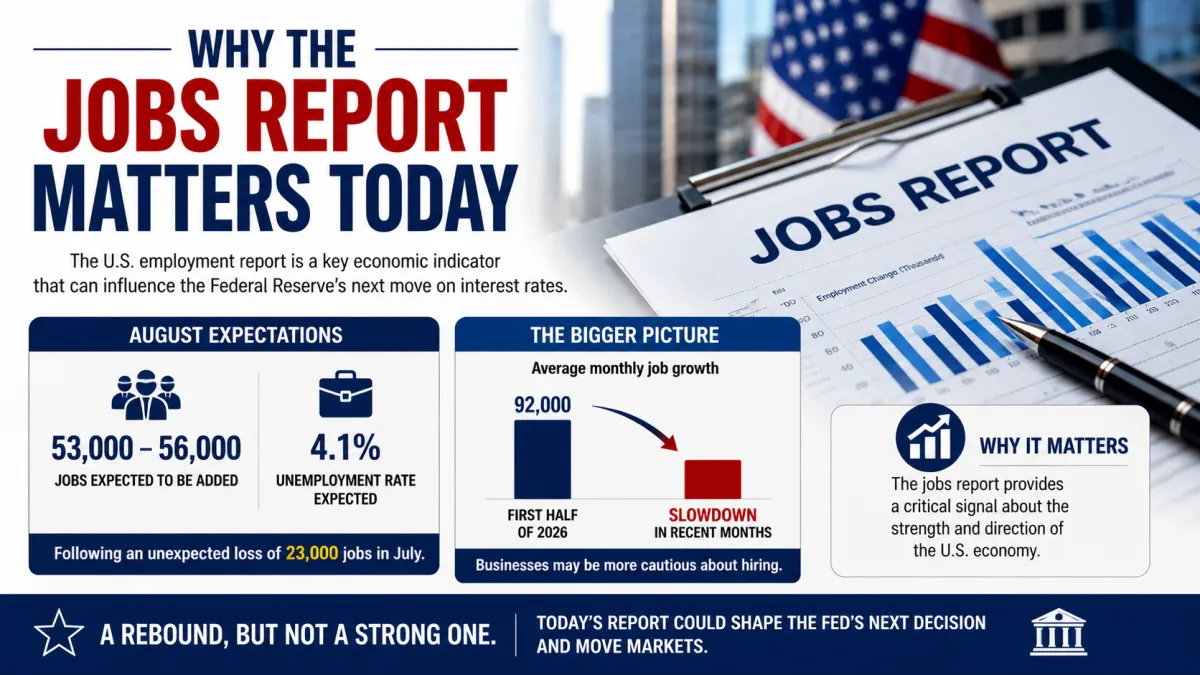
Why the Jobs Report Matters Today
The U.S. employment report is one of the most important pieces of economic data for markets because it can influence the Federal Reserve’s next interest-rate decision.
Economists had expected U.S. employers to add roughly 53,000 to 56,000 jobs in August, following an unexpected loss of 23,000 jobs in July. The unemployment rate was expected to remain around 4.1%.
That would represent a rebound, but not a particularly strong one.
The bigger story is the direction of the labor market. Employment grew at a much healthier pace during the first half of 2026, when the economy added an average of about 92,000 jobs per month. The sharp slowdown in recent months has raised questions about whether businesses are becoming more cautious about hiring.
For investors, the report could therefore provide an important signal about the strength of the U.S. economy.
Fed Policy Remains at the Center of the Market
Interest rates remain one of the biggest forces moving stocks.
Federal Reserve Governor Christopher Waller recently indicated that he could support keeping rates steady if upcoming inflation data confirms that price pressures are cooling. His comments helped ease some concerns about another rate increase and contributed to Thursday’s market rally.
But the situation is far from settled.
Inflation remains above the Federal Reserve’s 2% target, while Treasury yields have been elevated. That combination makes the Fed’s next decision difficult: policymakers must balance inflation risks against signs that the labor market is losing momentum.
Markets had been pricing roughly even odds of a quarter-point rate increase at the September meeting, showing just how uncertain the outlook remains.
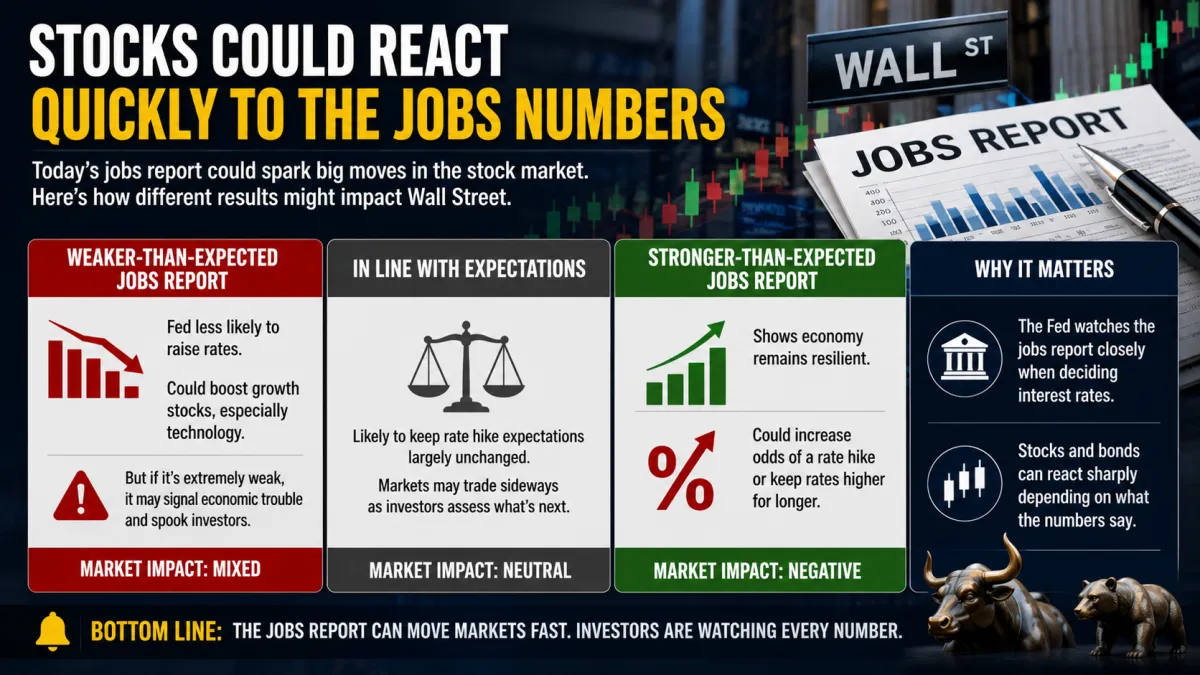
Stocks Could React Quickly to the Jobs Numbers
Friday’s trading could become volatile if the employment figures differ significantly from expectations.
A much weaker jobs report could reinforce expectations that the Federal Reserve will avoid raising interest rates. That scenario could be supportive for growth-oriented stocks, particularly technology companies, because lower or stable rates generally reduce pressure on valuations.
However, an extremely weak report could also raise concerns about the health of the economy. Investors would then have to decide whether falling interest-rate expectations outweigh fears about slower economic growth.
A stronger-than-expected jobs report could create the opposite reaction. It might suggest that the economy remains resilient, but it could also increase concerns that the Federal Reserve has less reason to keep policy accommodative.
That makes today’s report unusually important for both stocks and bonds.
Labor Market Rebound May Not Tell the Whole Story
Even if August payrolls show an improvement, economists are warning against reading too much into a single month’s number.
Some of the expected increase could come from seasonal changes in local government education employment and a potential recovery in leisure and hospitality hiring.
At the same time, the labor market is facing broader structural pressures. Falling labor-force participation, demographic changes, retirements and lower immigration are affecting the number of people available to work.
Wage growth is also expected to have slowed to around 3% annually, which could provide some relief on the inflation front. AI infrastructure companies have benefited from strong data-center spending. Dell stock has also attracted investor attention because of its growing AI-server business.
What Investors Are Watching Next
The jobs report is only one part of the market’s bigger puzzle.
Investors will also be watching upcoming inflation data, Treasury yields, oil prices and further signals from the Federal Reserve. Those factors could determine whether the recent stock-market rally has room to continue or whether higher borrowing costs begin to weigh more heavily on equities.
For now, two competing stories are shaping the market: the economy may be slowing enough to ease pressure on interest rates, while persistent inflation could keep the Federal Reserve cautious.
That tension is likely to keep the Dow, S&P 500 and Nasdaq sensitive to every major economic release in the days ahead.
Stock market today is therefore less about one number and more about what that number says about the next move from the Federal Reserve.
Pingback: Stock Market Crash: What History Tells Us About the Next Downturn
Pingback: Digital Gold May Get New Rules in India