COBRA health insurance allows eligible employees and their families to temporarily keep their employer-sponsored health coverage after job loss or certain life changes. Although it helps prevent a gap in insurance, you usually pay the full premium yourself, making it important to compare costs and alternatives.
What Is COBRA Health Insurance?
COBRA stands for the Consolidated Omnibus Budget Reconciliation Act, a federal law that protects eligible workers and their families when they lose access to employer-sponsored health insurance.
Instead of immediately switching to a new health plan, eligible individuals can continue their existing group health coverage for a limited period. This can be particularly helpful if you are between jobs, receiving ongoing medical treatment, or want to keep your current doctors.
COBRA is generally available through private-sector employers with at least 20 employees and most state and local government plans. Certain employers and health plans are exempt, so eligibility depends on your specific circumstances.
Understanding how financial decisions are made can help you evaluate complex costs and risks. Learn about the key advantage of explainable AI in finance and how transparent AI systems can make financial insights easier to understand.
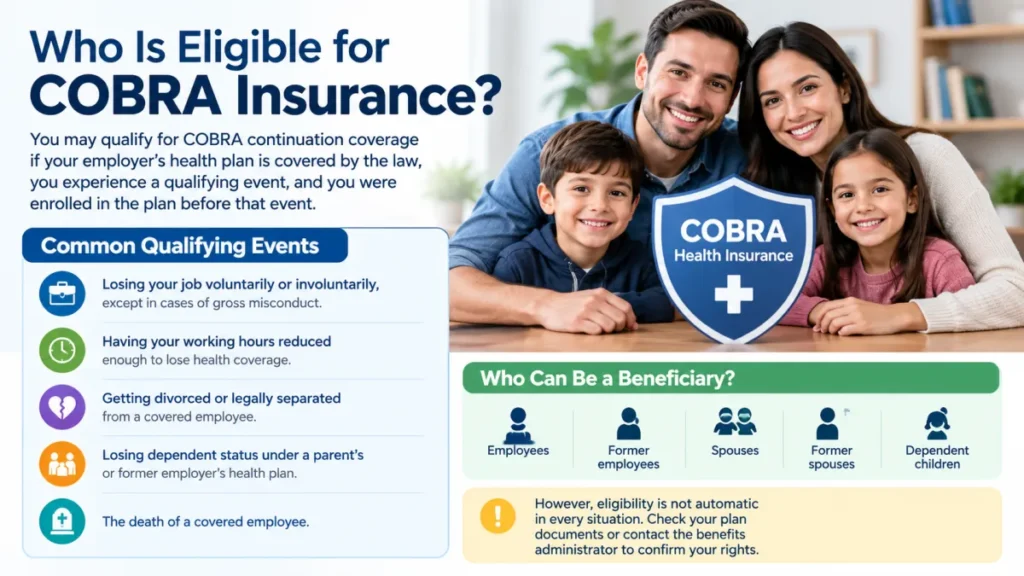
Who Is Eligible for COBRA Insurance?
You may qualify for COBRA continuation coverage if your employer’s health plan is covered by the law, you experience a qualifying event, and you were enrolled in the plan before that event.
Common qualifying events include:
- Losing your job voluntarily or involuntarily, except in cases of gross misconduct.
- Having your working hours reduced enough to lose health coverage.
- Getting divorced or legally separated from a covered employee.
- Losing dependent status under a parent’s or former employer’s health plan.
- The death of a covered employee.
Eligible beneficiaries may include employees, former employees, spouses, former spouses, and dependent children. However, eligibility is not automatic in every situation. Check your plan documents or contact the benefits administrator to confirm your rights.
How Long Does COBRA Coverage Last?
The length of COBRA coverage depends on the qualifying event and individual circumstances.
- 18 months: Generally applies when employment ends or working hours are reduced, resulting in a loss of coverage.
- Up to 36 months: May apply to certain events affecting spouses and dependents, such as divorce, the employee’s death, or a dependent child losing eligibility.
- Possible extensions: Some qualifying individuals may receive additional coverage under specific disability or second-event rules.
Coverage can end earlier in certain circumstances, including when premiums are not paid on time or the employer stops maintaining the group health plan. Check your election notice for the exact dates and conditions.
For a more detailed explanation of continuation coverage, eligibility requirements, and potential costs, read this guide to COBRA health insurance from Investopedia.
How to Enroll in COBRA Health Insurance
Enrolling in COBRA requires paying attention to deadlines. Missing the election period can mean losing your opportunity to continue the plan.
Follow these steps:
- Review your COBRA notice. Your employer or plan administrator should provide information about your continuation rights and available coverage.
- Check the election deadline. You generally have at least 60 days to elect COBRA, measured from the later of the date coverage would otherwise end or the date the election notice is provided.
- Compare your options. Review COBRA alongside Marketplace plans, a spouse’s employer plan, or other available coverage.
- Submit your election. Follow the instructions provided by your plan administrator.
- Pay your first premium. You generally have at least 45 days after electing coverage to make the initial payment.
Keep copies of your notices, enrollment documents, and payment confirmations. If anything is unclear, contact your plan administrator before the deadline.
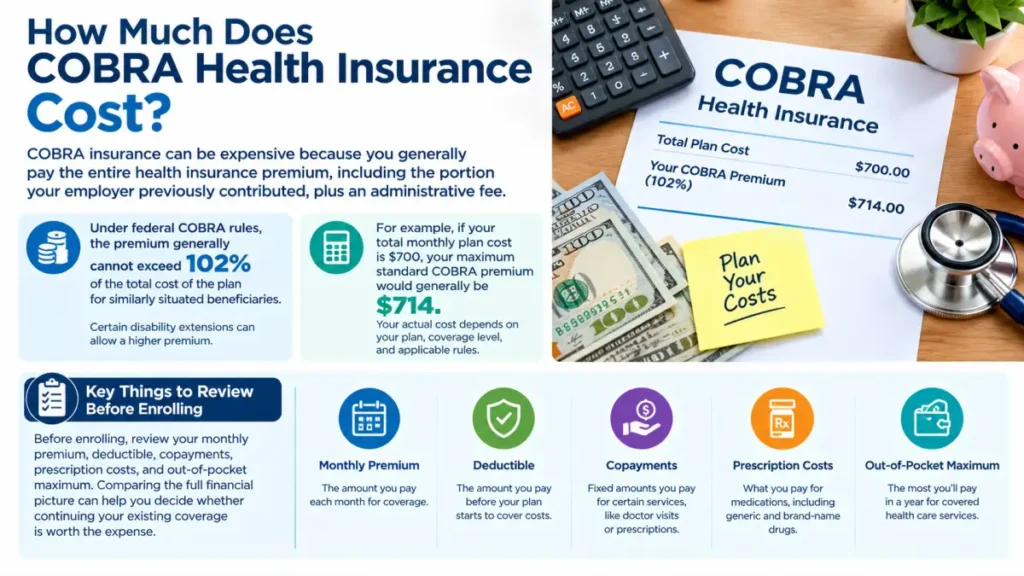
How Much Does COBRA Health Insurance Cost?
COBRA insurance can be expensive because you generally pay the entire health insurance premium, including the portion your employer previously contributed, plus an administrative fee.
Under federal COBRA rules, the premium generally cannot exceed 102% of the total cost of the plan for similarly situated beneficiaries. Certain disability extensions can allow a higher premium.
For example, if your total monthly plan cost is $700, your maximum standard COBRA premium would generally be $714. Your actual cost depends on your plan, coverage level, and applicable rules.
Before enrolling, review your monthly premium, deductible, copayments, prescription costs, and out-of-pocket maximum. Comparing the full financial picture can help you decide whether continuing your existing coverage is worth the expense.
Is COBRA Better Than Marketplace Health Insurance?
COBRA may be a good choice if you want to keep your current employer plan, doctors, and established treatment arrangements. However, it is not always the most affordable option.
Marketplace health insurance may offer premium tax credits to eligible individuals, depending on their household income and circumstances. A spouse’s employer plan may also be an option, while Medicaid could provide coverage for people who meet their state’s eligibility requirements.
Compare premiums, deductibles, provider networks, prescription coverage, and enrollment deadlines before making a decision. Losing job-based coverage generally creates a special enrollment opportunity for Marketplace coverage, but specific deadlines and eligibility rules apply.
Managing your finances carefully can help you prepare for unexpected healthcare expenses. Learn more about personal asset management to understand your assets, track your financial position, and plan for future expenses.
Frequently Asked Questions About COBRA
Can I get COBRA if I quit my job?
Yes. Voluntarily leaving a job generally qualifies for COBRA if you meet the other eligibility requirements and your loss of coverage is a qualifying event.
Does COBRA cover pre-existing conditions?
COBRA generally continues the same group health plan, including its covered benefits and applicable rules. It does not create a separate health insurance policy.
Can I cancel COBRA early?
You can generally end your COBRA coverage early by following your plan’s cancellation procedures. Before doing so, confirm that replacement coverage is available and understand when it will begin.
Is COBRA health insurance worth it?
It depends on your budget, medical needs, and alternatives. COBRA may be worthwhile for maintaining existing coverage, while a Marketplace plan or other eligible option may cost less.
Final Thoughts
COBRA health insurance can provide valuable temporary protection when employment or family changes affect your health benefits. However, the full premium can put pressure on your budget.
Understand your eligibility, calculate the total cost, and compare alternative plans before deciding. For official guidance, review the U.S. Department of Labor’s COBRA resources or contact your health plan administrator to confirm the rules that apply to you.
Pingback: Galaxy Digital Reports $569 Million in Adjusted Gross Profit for Q3 2026