If you have money sitting in a regular savings account, it may be worth checking how much interest you’re actually earning. High-yield savings account rates remain attractive in September 2026, with some of the best accounts offering around 4% APY or more.
For savers, that can make a noticeable difference, especially if you’re keeping thousands of dollars in an emergency fund or saving for a major purchase.
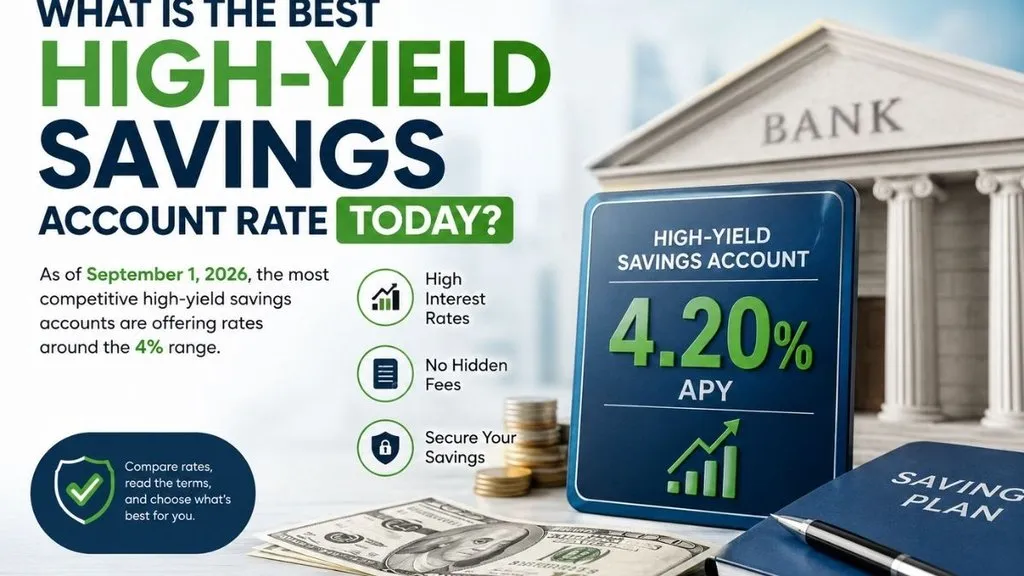
What Is the Best High-Yield Savings Account Rate Today?
As of September 1, 2026, the most competitive high-yield savings accounts are offering rates around the 4% range, while some accounts are advertising even higher APYs under certain conditions.
That sounds appealing, but there’s an important catch: the account with the highest rate isn’t necessarily the right one for everyone.
Some banks may require a certain balance, direct deposit, or other qualifying activity to receive their best rate. Others may only pay the top APY on a limited amount of money.
So, before moving your savings, look at the full account terms. If you’re building an emergency fund or saving for a major goal, having a clear financial plan can help you decide how much to save and where to keep your money.
Why Are People Choosing High-Yield Savings Accounts?
The biggest attraction is simple: you can earn more interest without giving up easy access to your money.
A high-yield savings account can be useful if you’re building an emergency fund, saving for a home, planning a vacation, or want somewhere to keep cash that you don’t need to spend right away.
Unlike stocks, your savings aren’t exposed to daily stock market swings. You also don’t have to lock your money away for a fixed period as you would with many CDs.
How Much Could You Earn?
The difference becomes more noticeable as your balance grows.
For example, at a 4% APY, keeping $10,000 in a savings account for a year could earn roughly $400 in interest, assuming the rate stays the same and you don’t withdraw the money.
If you have $25,000, that same rate could produce around $1,000 in interest over a year.
Of course, these are simple examples. Your actual earnings will depend on the account’s APY, balance, and how often the bank compounds interest.
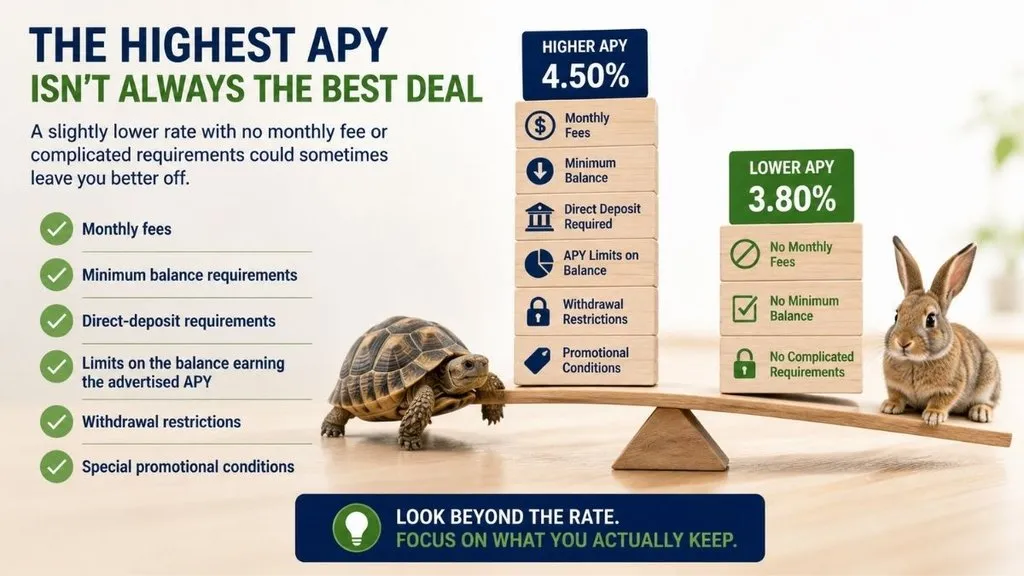
The Highest APY Isn’t Always the Best Deal
It’s easy to see a big number and immediately think you’ve found the perfect savings account. But there’s more to consider.
Check whether the account has:
- Monthly fees
- Minimum balance requirements
- Direct-deposit requirements
- Limits on the balance earning the advertised APY
- Withdrawal restrictions
- Special promotional conditions
A slightly lower rate with no monthly fee or complicated requirements could sometimes leave you better off.
Keep an Eye on Your Rate
One thing many savers forget is that savings account rates can change.
The APY you receive today isn’t necessarily the rate you’ll receive six months from now. Banks can adjust their rates as economic and interest-rate conditions change.
That’s why it can be smart to check your account from time to time and compare it with other competitive options.
Is a High-Yield Savings Account Worth It?
For many people, yes. If you’re keeping a large amount of cash in savings, earning a competitive APY can help your money work harder without taking on the risks associated with market investments.
The key is not simply to chase the highest number. Look at the APY, fees, requirements, and accessibility together. If you choose a credit union, check whether your deposits are protected by NCUA share insurance
Bottom Line
The high-yield savings account rate remains an important opportunity for savers in September 2026. With leading accounts offering around 4% APY or more, there is still potential to earn meaningful interest on cash.
If your current savings account is paying very little, now may be a good time to compare your rate with today’s high-yield options.
Pingback: Personal Financial Management: Simple Ways to Take Control of Your Money