Mitsui Chemicals has agreed to acquire semiconductor materials maker JSR in a major deal worth approximately ¥1.84 trillion ($11.6 billion), with support from the Development Bank of Japan. Announced on November 9, 2026, the acquisition aims to strengthen Japan’s semiconductor materials industry and expand Mitsui Chemicals’ position in the global technology supply chain.
The transaction is one of the biggest developments in Japan’s chemical industry, reflecting the growing importance of advanced materials as demand for semiconductors continues to increase.

What Is the Mitsui Chemicals JSR Acquisition Deal?
The Mitsui Chemicals JSR acquisition is an agreement under which Mitsui Chemicals will acquire JSR Corporation from the state-backed JIC Capital. The transaction values JSR’s equity at approximately ¥1.392 trillion, or around $8.8 billion.
Including JSR’s interest-bearing debt, the overall transaction value is approximately ¥1.84 trillion ($11.6 billion). The growing importance of semiconductor materials is also influencing investor sentiment, as recent movements in semiconductor market trends show how closely the technology and financial markets are connected.
The Development Bank of Japan (DBJ) will also participate by investing ¥200 billion through non-voting preferred shares. Mitsui Chemicals intends to acquire all voting rights in JSR, giving it control of the company’s business operations.
The transaction is expected to close in the second half of fiscal 2027, subject to the required regulatory approvals and other closing conditions.
Why Is Mitsui Chemicals Acquiring JSR?
The main reason behind the acquisition is to strengthen Mitsui Chemicals’ position in the semiconductor materials market.
Semiconductors are essential components in smartphones, computers, electric vehicles, artificial intelligence systems and industrial equipment. As technology advances, manufacturers increasingly need specialized materials to produce smaller, faster and more efficient chips.
JSR has established expertise in semiconductor materials, particularly photoresists. By bringing JSR into its business portfolio, Mitsui Chemicals expects to expand its technology capabilities and serve a wider range of semiconductor manufacturers.
The acquisition is also part of Mitsui Chemicals’ broader strategy to become a global specialty chemicals company rather than relying heavily on traditional chemical businesses.
What Does JSR Corporation Bring to Mitsui Chemicals?
JSR Corporation is a Japanese technology company known for producing materials used in semiconductor manufacturing.
One of its important products is photoresist, a light-sensitive material used to transfer circuit patterns onto semiconductor wafers during chip production.
These materials play an important role in manufacturing advanced semiconductors. Their quality and performance can influence how precisely manufacturers create increasingly complex chip designs.
JSR also has established customer relationships, research capabilities and technical expertise in the semiconductor industry.
Combining these strengths with Mitsui Chemicals’ existing materials portfolio could create opportunities to develop more advanced products and provide broader solutions to semiconductor manufacturers.
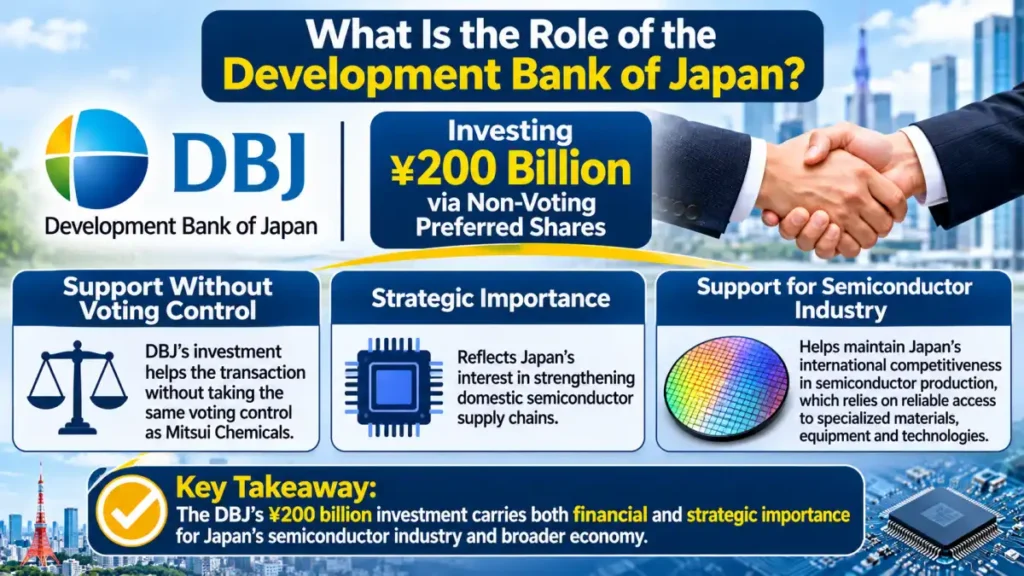
What Is the Role of the Development Bank of Japan?
The Development Bank of Japan is an important financial partner in this acquisition.
DBJ plans to invest ¥200 billion through non-voting preferred shares. This arrangement allows the bank to support the transaction without taking the same voting control as Mitsui Chemicals.
Its participation also reflects Japan’s wider interest in strengthening domestic semiconductor supply chains.
Semiconductor production depends on reliable access to specialized materials, equipment and technologies. Japan has an established position in several areas of this industry, and supporting domestic companies could help maintain its international competitiveness.
The investment therefore has both financial and strategic importance.
How Will Mitsui Chemicals Finance the Acquisition?
Financing is one of the most important aspects of this transaction because of its significant size.
Mitsui Chemicals plans to use a bridge loan of approximately ¥1.64 trillion to finance the acquisition and related funding requirements. The company is also considering additional financing through bank loans, debt issuance and mezzanine financing.
It has indicated plans to raise up to ¥150 billion through a common share issuance.
This financing structure will help the company complete the purchase, but it also creates financial responsibilities. Managing debt, maintaining cash flow and generating sufficient returns will be important after the transaction closes.
How Could the Acquisition Affect Japan’s Semiconductor Industry?
The acquisition could strengthen Japan’s position in the global semiconductor materials market.
Mitsui Chemicals and JSR have different areas of expertise, and combining their technologies could support product development across multiple stages of semiconductor manufacturing.
The companies may also benefit from shared research resources, broader customer relationships and improved manufacturing capabilities.
Another potential benefit is stronger domestic supply-chain resilience. As countries focus more on semiconductor security, reliable access to advanced materials has become an important economic and industrial priority.
However, the actual benefits will depend on how effectively both businesses integrate their operations and technologies.
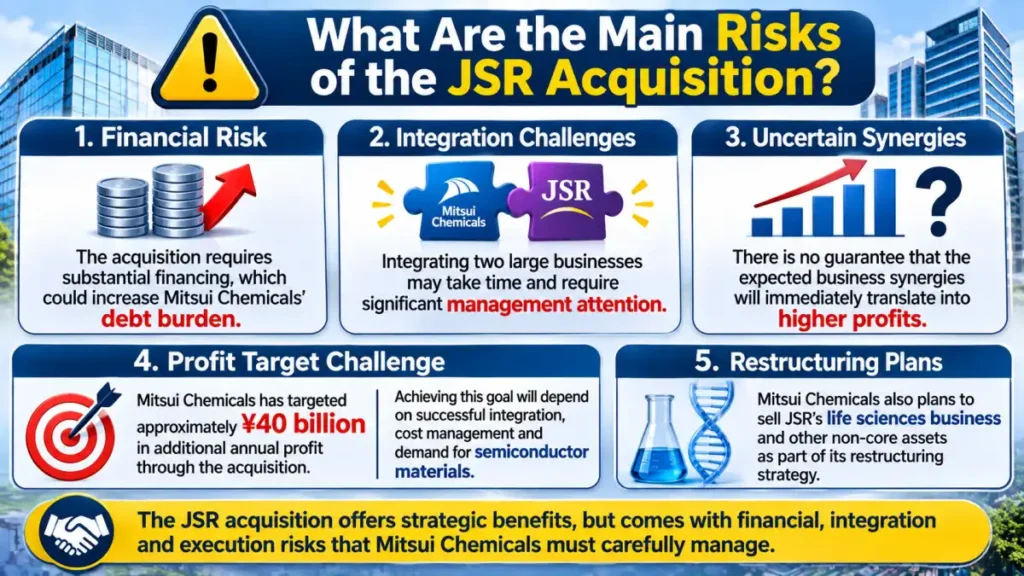
What Are the Main Risks of the JSR Acquisition?
Despite its strategic potential, the deal carries several challenges.
First, the acquisition requires substantial financing, which could increase Mitsui Chemicals’ debt burden. Second, integrating two large businesses may take time and require significant management attention.
There is also no guarantee that the expected business synergies will immediately translate into higher profits.
Mitsui Chemicals has discussed targeting approximately ¥40 billion in additional annual profit through the acquisition. Achieving this goal will depend on successful integration, cost management and demand for semiconductor materials. For more insights into financial markets and business developments, readers can explore FinexAIA’s coverage of important changes shaping the global economy.
The company has also indicated plans to sell JSR’s life sciences business and other non-core assets as part of its restructuring strategy.
What Happens Next?
The next major step is completing the regulatory and transaction requirements before the expected closing in the second half of fiscal 2027.
Until then, investors and industry participants will be watching Mitsui Chemicals’ financing plans, JSR’s business performance and progress toward integration.
The success of the acquisition will ultimately depend on whether Mitsui Chemicals can turn JSR’s technology and market position into sustainable business growth.
Final Thoughts
The Mitsui Chemicals JSR acquisition represents a significant development for Japan’s chemical and semiconductor materials industries. By acquiring JSR with financial support from the Development Bank of Japan, Mitsui Chemicals aims to expand its advanced materials business and strengthen its international competitiveness.
Although the deal offers opportunities for growth, its financial costs and integration challenges should not be overlooked. The real test will come after completion, when Mitsui Chemicals must demonstrate that the combined businesses can deliver long-term value.
Pingback: Social Security COLA 2027: Latest Forecast and Estimate What to Expect