Bank investors grow wary of AI debt as market volatility, rising borrowing costs, and uncertainty surrounding artificial intelligence investments create new challenges for lenders and technology companies. Financial institutions are becoming more cautious about funding AI infrastructure projects, particularly data centers and high-cost computing operations.

Why Are Banks and Investors Becoming Wary of AI Debt?
Artificial intelligence has attracted enormous investment over recent years. Technology companies have borrowed heavily to expand their computing capacity, build data centers, purchase advanced chips, and support increasingly powerful AI systems.
However, the financial environment is beginning to change. Recent stock market losses and concerns about the long-term profitability of AI investments have encouraged banks and credit investors to reconsider their lending strategies.
Previously, many financial institutions were eager to finance AI-related projects. Strong expectations about future demand and support from established technology companies made these deals attractive.
Now, lenders are paying closer attention to potential risks. They want stronger evidence that borrowers can generate enough revenue to repay their loans, even if economic conditions become less favorable.
Artificial intelligence is also changing how financial institutions manage financial operations, assess risks, and analyze business performance. Learn more about the artificial intelligence finance and its growing impact on the financial industry.
Market Selloff Changes the AI Investment Outlook
The recent market selloff has increased uncertainty across the technology sector. Falling technology stock prices have made investors question whether expectations surrounding artificial intelligence have become too optimistic.
The decline has also affected confidence in companies building AI infrastructure.
When technology valuations fall, lenders may become more concerned about the financial strength of borrowers and the value of assets supporting their loans.
This does not necessarily mean that investment in artificial intelligence will stop. Instead, it suggests that financial institutions are becoming more selective about where they commit their money.
Investors are increasingly interested in realistic business performance rather than future growth expectations alone.
AI Data Centers Create New Borrowing Risks
Data centers are among the biggest sources of financing demand in the artificial intelligence industry. These facilities require substantial investment in electricity, cooling systems, advanced processors, networking equipment, and physical infrastructure.
Companies need access to significant capital before these facilities can generate consistent revenue.
This creates a financial challenge. Construction delays, electricity shortages, higher operating expenses, or weaker customer demand can affect expected returns.
Banks are therefore examining whether AI infrastructure projects can generate reliable cash flow over the full repayment period.
They are also reviewing customer agreements, service obligations, construction deadlines, and contract termination conditions.
A project supported by a major technology customer may still carry financial risks if that customer can reduce its commitments or withdraw from an agreement under certain conditions.

Private Credit Investors Become More Selective
Private credit has become an important source of funding for companies involved in AI infrastructure.
These lenders often provide financing when traditional banking arrangements are less suitable. Their involvement has helped support the rapid expansion of data centers and specialized computing businesses.
However, growing exposure to AI-related borrowers is encouraging private credit investors to reconsider their risk levels.
Some lenders are now focusing more heavily on borrower financial health, debt repayment capacity, and the quality of collateral.
Smaller AI infrastructure companies may face additional difficulties because they generally have fewer financial resources than established technology giants.
As a result, borrowers with weaker balance sheets or uncertain revenue prospects could find financing more expensive or difficult to secure. Growing concerns about borrowing costs and market uncertainty are changing the financial outlook for artificial intelligence companies. Explore more insights into AI debt financing.
Rising Debt Costs Put Pressure on AI Companies
Borrowing costs are another important concern for the artificial intelligence industry.
When investors demand higher returns for accepting additional risk, companies must pay more to raise money through bonds and other debt instruments.
The spread on long-term borrowing by major cloud infrastructure companies has increased more noticeably than borrowing spreads for some established industrial businesses.
This difference suggests that investors are becoming more cautious about the financial risks associated with large AI investments.
Higher financing costs can reduce profitability, increase interest expenses, and make new infrastructure projects less attractive.
Companies that depend heavily on borrowed money may face the greatest pressure if revenue growth fails to meet expectations.
Will AI Infrastructure Investment Slow Down?
Despite growing caution, demand for AI infrastructure financing remains substantial.
Large technology companies continue to require computing capacity, advanced chips, and data center facilities to develop and operate artificial intelligence services.
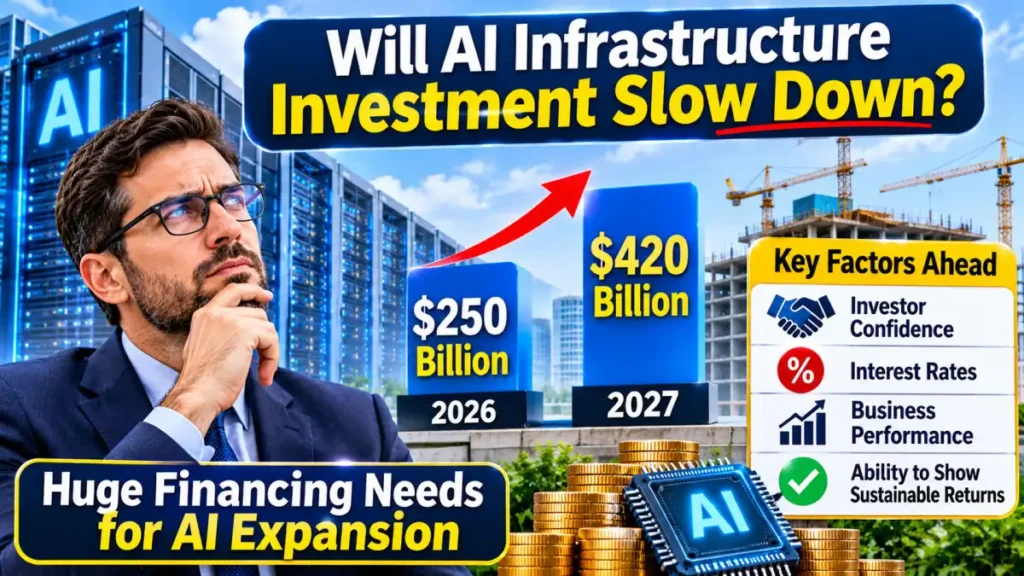
Industry estimates suggest that global debt issuance by major cloud computing companies could reach approximately $420 billion in 2027, compared with an estimated $250 billion in 2026.
These projections highlight the enormous financing requirements associated with AI expansion.
However, future borrowing will likely depend on investor confidence, interest rates, business performance, and the ability of companies to demonstrate sustainable returns.
A more selective lending environment could encourage businesses to prioritize profitable projects instead of expanding infrastructure without carefully evaluating financial consequences.
What This Means for the Banking and Technology Sectors
The changing attitude toward AI debt has implications for both financial institutions and technology companies.
For banks, the priority is managing exposure to a rapidly growing industry while maintaining responsible lending standards.
For technology companies, access to affordable financing may become more challenging, particularly for businesses with substantial infrastructure costs and uncertain revenue.
Investors may also begin distinguishing between companies with strong cash flows and those relying mainly on future growth expectations.
Ultimately, the development of artificial intelligence will continue to create opportunities across the global economy. However, financial support will increasingly depend on whether companies can demonstrate that their investments are commercially sustainable. Growing uncertainty is not limited to AI financing, as investors are also reconsidering technology valuations and future growth expectations. Read more about AI investment risks.
Conclusion
Banks investors grow wary of AI debt because the financial risks surrounding artificial intelligence infrastructure are receiving greater attention. Market volatility, rising borrowing costs, and questions about future returns are changing how lenders evaluate AI-related projects.
Although financing demand remains strong, the industry may be entering a more disciplined investment period. Companies that demonstrate reliable cash flow, manageable debt, and realistic growth plans are likely to attract greater investor confidence.
The future of AI financing will depend not only on technological progress but also on financial performance and the ability to turn expensive infrastructure into sustainable business value.
Frequently Asked Questions (FAQs)
1. Why are bank investors growing wary of AI debt?
Banks and investors are becoming cautious because of market volatility, increasing debt exposure, uncertain investment returns, and concerns about the profitability of AI infrastructure projects.
2. How does the stock market selloff affect AI financing?
A stock market decline can reduce investor confidence, increase perceived borrowing risks, and encourage lenders to apply stricter conditions before financing AI-related businesses.
3. Why do AI companies need so much debt financing?
AI companies require significant capital to build data centers, purchase advanced processors, expand computing capacity, and maintain the infrastructure needed to operate AI services.
4. Will banks stop lending to artificial intelligence companies?
Not necessarily. Banks are more likely to become selective, prioritizing borrowers with strong financial positions, reliable customers, sustainable cash flows, and credible repayment plans.
5. What is the future outlook for AI debt financing?
AI financing demand is expected to remain significant as technology companies expand their infrastructure. However, lending decisions may increasingly depend on profitability, financial stability, and the ability to manage debt responsibly.